Can’t find what you’re looking for? We stock more than what’s available online, please give us a call on 01904 608157 or use the live chat and we’ll be happy to help.

How to Stop Birds Eating Grass Seed After Sowing

Birds eating grass seed is a common problem after sowing, especially when seed is left visible on the surface. While it is difficult to stop every bird completely, you can reduce losses by making the seed harder to see, harder to reach, and quicker to establish.


The aim is not to overcomplicate the job, but to protect the seed during its most vulnerable stage while still giving it the moisture, warmth, and soil contact it needs to grow.


In this guide, we explain why birds eat grass seed, which birds are most likely to target it, how long seed needs protecting, and the most effective ways to keep birds away after sowing.


Why Do Birds Eat Grass Seed?


Birds eat grass seed because it is small, nutritious, and easy to find when it is left exposed on the surface of the soil. Freshly sown lawns can look like an open buffet, especially if the seed has not been raked in, dressed over, or protected.


Grass seed is particularly attractive because:


•    It is high in energy.


•    It is easy for birds to spot on bare soil.


•    Newly prepared soil is often open and undisturbed.


•    Seeded areas are usually watered, which can also attract birds and insects.


•    There is little natural cover to hide the seed.


Birds are opportunistic feeders. They are not trying to damage the lawn; they are simply taking advantage of an easy food source.


Which Birds Eat Grass Seed?


Several common garden birds may eat grass seed, especially when it is freshly sown and visible on the surface.


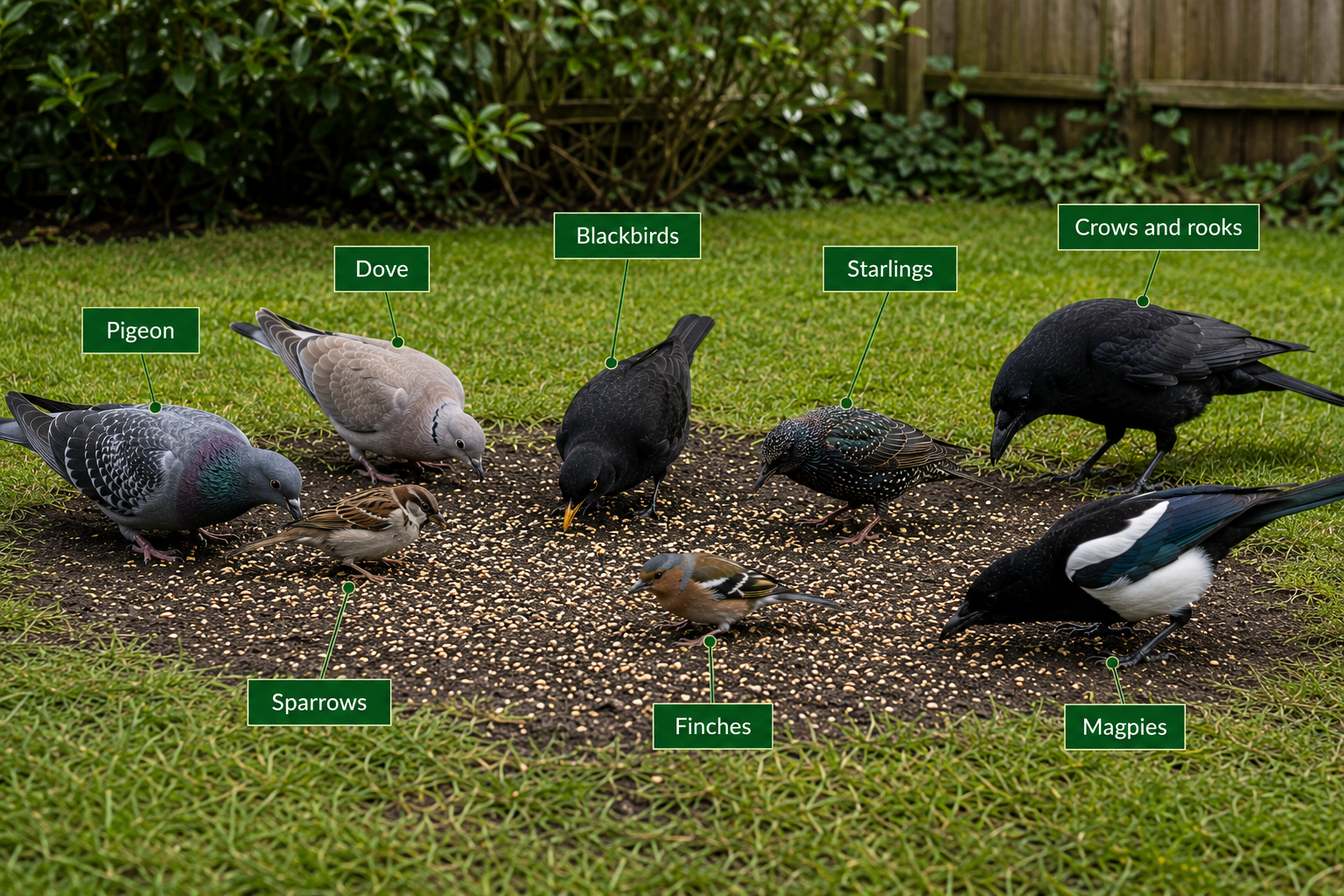
The birds most likely to feed on grass seed include:


•      Pigeons

•      Doves

•      Sparrows

•      Finches

•      Blackbirds

•      Starlings

•      Crows and rooks

•      Magpies


Smaller birds may pick at individual seeds, while larger birds such as pigeons, crows, and rooks can cause more noticeable damage. Pigeons are often the most persistent because they are confident ground feeders and will return repeatedly if they find a reliable food source.


How Long Do Birds Target New Grass Seed?


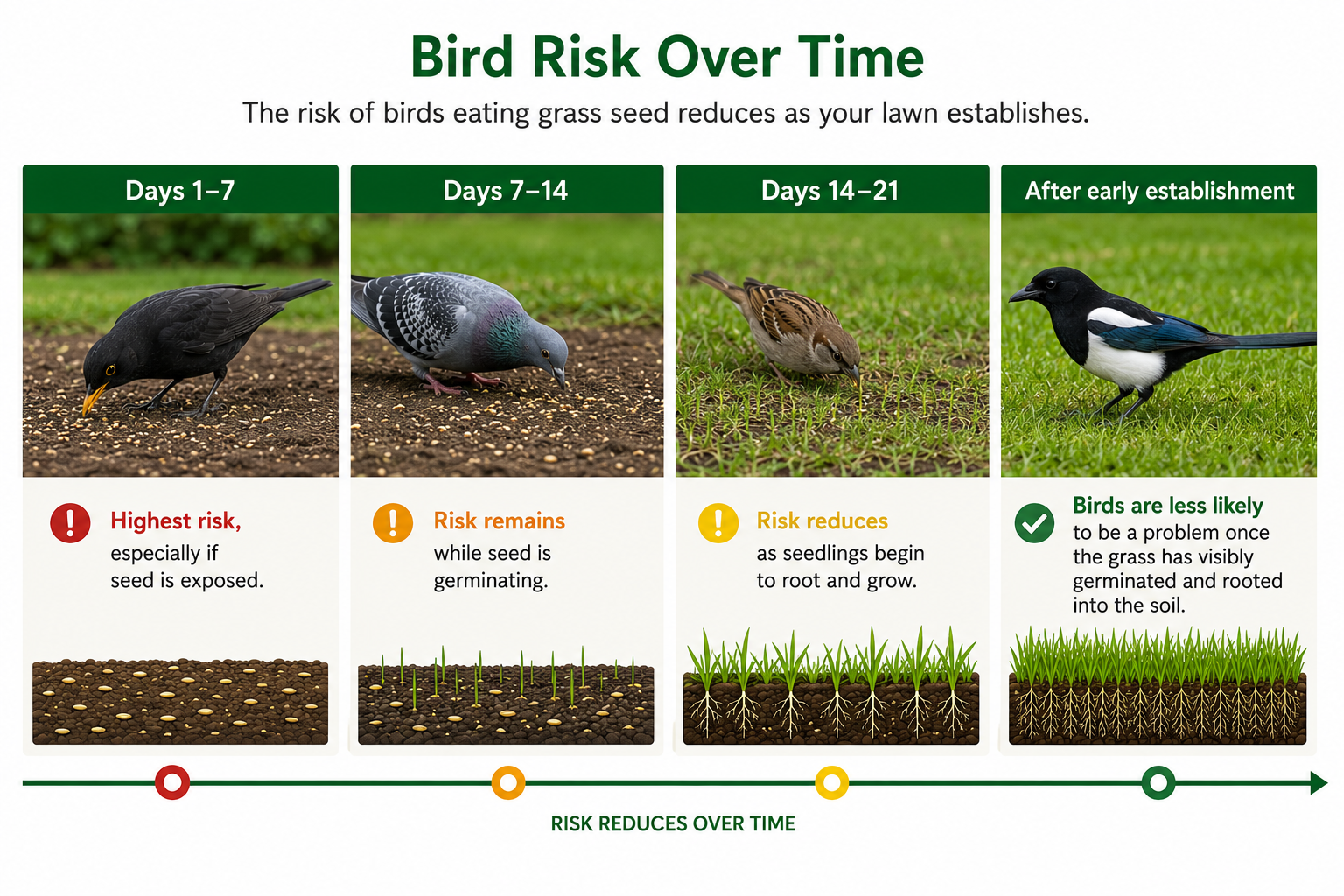
Birds are usually most interested in grass seed during the period between sowing and germination. This is when the seed is most accessible.


In most cases, grass seed needs protecting for around 2 to 3 weeks, depending on the seed mixture, weather, soil temperature, and growing conditions.


As a general guide:


Some fast-germinating lawn seed may begin to sprout within 7 to 10 days in good conditions, while slower mixes or cooler weather may take longer.


How to Stop Birds Eating Grass Seed


The best way to stop birds eating grass seed is to combine proper seed coverage with temporary deterrents. One method on its own may help, but a layered approach is usually more reliable.


1. Rake the Seed Into the Soil


One of the most common mistakes is leaving grass seed sitting on the surface. After sowing, lightly rake the seed into the top layer of soil.


You do not need to bury it deeply. Grass seed only needs good contact with the soil and a light covering. If it is buried too far down, germination may suffer.


Aim for the seed to be lightly mixed into the top few millimetres of soil so it is less visible to birds but still close enough to the surface to grow.


2. Use a Light Top Dressing


A thin layer of topsoil, compost, or lawn dressing can help hide and protect grass seed after sowing.
This has several benefits:


•    It makes the seed less visible to birds.


•    It improves seed-to-soil contact.


•    It helps retain moisture.


•    It protects seed from being washed or blown away.


•    It creates better conditions for germination.


Avoid applying a heavy layer. Too much material can smother the seed and reduce germination. A light, even covering is usually enough.


3. Firm the Seed Down


After sowing and lightly covering the seed, firm the area down gently. This can be done with a lawn roller, the back of a rake, or by carefully walking over smaller areas.


Firming helps press the seed into the soil, making it harder for birds to pick up and improving germination at the same time.


4. Use Netting or Fleece


For areas where birds are a persistent problem, temporary netting or garden fleece can be very effective.

Netting acts as a physical barrier, stopping birds from landing directly on the seeded area. It is especially useful for:


•       Newly sown lawns


•       Bare patches


•       Large open areas


•       Gardens with lots of pigeons


•      Areas near hedges, trees, or rooftops where birds gather


Make sure the netting is raised slightly above the soil and secured at the edges so birds cannot get underneath it. Avoid loose netting that birds could become tangled in.


Garden fleece can also be used, particularly in cooler conditions, as it helps protect seed while retaining warmth and moisture.


5. Use Bird Deterrents


Visual deterrents can help keep birds away from newly seeded areas. These are most effective when they move, reflect light, or create uncertainty.


Common options include:


•      Reflective tape


•      Old CDs or reflective discs


•       Windmills


•       Bird scarers


•       Decoy predators


•       String lines across the seeded area


Deterrents work best as a short-term support, not as a replacement for properly covering and firming the seed.

For best results, move deterrents around regularly. Birds quickly get used to objects that stay in the same place.


6. Keep the Area Lightly Watered


Moist soil helps seed germinate quickly, reducing the length of time it remains vulnerable. Water newly sown seed gently and regularly so the surface stays moist but not waterlogged.


Avoid heavy watering, as this can wash seed into piles or expose it on the surface, making it easier for birds to find.



How to Protect Grass Seed After Sowing


Protecting grass seed properly starts before the birds arrive. The aim is to make the seed less visible, less accessible, and quicker to germinate.


A good process is:


•      Prepare the soil by removing weeds, stones, and debris.


•       Loosen the surface to create a fine seedbed.


•       Sow the grass seed evenly at the recommended rate.


•       Lightly rake the seed into the soil.


•       Apply a thin top dressing if needed.


•       Firm the area gently.


•       Water with a fine spray.


•       Add netting, fleece, or deterrents if birds are likely to be an issue.


The better the seed is incorporated into the soil, the harder it is for birds to eat.


Should You Cover Grass Seed with Topsoil?


Yes, covering grass seed with a light layer of topsoil or lawn dressing is often a good idea, especially if birds are a concern.


However, the key word is light. Grass seed should not be buried deeply. A thin covering is enough to hide it from birds and help it stay moist.


Too much soil can prevent light, warmth, and air reaching the seed, which may slow or reduce germination.


For patch repairs, a light sprinkle of topsoil works well. For larger areas, a quality lawn dressing can provide a more even finish.


How to Keep Pigeons and Larger Birds Away


Pigeons and larger birds can be more difficult to deter than smaller garden birds. They are confident, persistent, and used to feeding on the ground.


Pigeons are particularly attracted to:


•      Open seeded areas


•      Bare soil


•      Easily visible seed


•      Quiet gardens or verges


•      Areas where they have fed before


To keep pigeons away from grass seed, physical protection is usually more reliable than simple scare tactics.


The best methods include:


•       Using bird netting over the seeded area


•       Applying a light top dressing to hide the seed


•       Pegging down fleece or mesh


•       Using reflective tape or moving deterrents


•       Creating temporary string lines above the soil


•       Avoiding over-seeding in obvious piles


For larger areas, deterrents need to be consistent. One scarecrow or static decoy is rarely enough on its own. Pigeons often learn quickly that a fixed object is not a threat.


How Long Do You Need to Protect Grass Seed For?


Grass seed should usually be protected until it has germinated and started to root firmly into the soil. This is typically around 2 to 3 weeks, but it depends on conditions.


You may need to protect seed for longer if:


•      The weather is cold.


•      The soil is dry.


•      Germination is slow.


•      Birds are especially persistent.


•      The area is exposed.


•       You have used a slower-growing seed mixture.


Once the new grass has reached a visible early growth stage and the seed is no longer sitting loose on the surface, the risk from birds drops significantly.


A good rule is to keep protection in place until the lawn has a fine green covering and the seedlings are anchored.


Do Other Pests Eat Grass Seed?


Birds are the most obvious seed predators, but they are not the only animals that may be interested in grass seed.


Other pests can include:

•      Mice


•       Rats


•       Squirrels


•       Ants


•       Some insects


Rats and mice may eat grass seed if it is available, especially where seed is stored badly, spilled spilt around sheds, or sown near existing rodent activity. This is more likely in areas with poor waste control, nearby food sources, compost heaps, or outbuildings.


In most domestic lawns, birds are the main concern. Rodents are less common as a direct problem with newly sown lawns, but they can become an issue if seed is left exposed or stored insecurely.


To reduce the risk:


•       Store grass seed in sealed containers.


•       Clean up spills immediately.


•       Avoid leaving open bags outside.


•       Do not over-apply seed in piles.


•       Keep the area tidy and free from food waste.


Common Mistakes When Protecting Grass Seed


Many problems with birds eating grass seed come down to poor preparation or inconsistent protection.


Leaving Seed Exposed: 


The biggest mistake is scattering seed and leaving it uncovered. Exposed seed is easy for birds to see and eat.


Sowing Too Much Seed:


More seed does not always mean a better lawn. Over-seeding can leave excess seed sitting on the surface, which attracts birds and creates uneven growth.


Not Firming the Soil:


Loose seed on loose soil is easy for birds to pick up. Firming improves soil contact and makes seed less accessible.


Using Deterrents Too Late:


If birds discover the seed before deterrents are in place, they may keep coming back. Protection should be added straight after sowing.


Relying on One Static Deterrent:


Birds quickly get used to objects that do not move. Static scarecrows, decoy owls, or fixed ornaments may only work for a short time.


Letting the Seed Dry Out:


Dry seed takes longer to germinate, which means birds have more time to eat it. Consistent moisture helps seed establish faster.


Removing Protection Too Early:


Seed may still be vulnerable even after the first signs of germination. Keep protection in place until the grass is visibly growing and beginning to root.


How Professionals Protect Newly Sown Grass Seed


Professional lawn care and landscaping teams usually focus on preparation, consistency, and reducing the time seed is exposed.


For larger areas, professional protection may include:


•      Proper seedbed preparation


•      Accurate seed application rates


•      Raking or harrowing seed into the surface


•      Rolling to improve seed-to-soil contact


•      Applying a suitable top dressing


•      Using germination sheets, fleece, or netting where needed


•       Keeping moisture levels consistent


•       Monitoring the site during the early establishment period


The key difference is consistency. Professionals rarely rely on one method alone. They aim to create the right conditions for fast germination while making the seed less available to birds from the start.


On larger lawns, sports areas, paddocks, or landscaped sites, this approach is especially important because birds can remove a noticeable amount of seed if the area is left exposed.


Final Thoughts


Birds eating grass seed is common, but it is usually manageable. The aim is not to stop every bird from entering the garden, but to reduce losses during the short period when seed is most vulnerable.


For the best results, lightly rake seed into the soil, apply a fine top dressing, firm the surface, keep it moist, and use netting or deterrents where birds are active.


Grass seed is most at risk during the first few weeks after sowing. Once it has germinated and started to establish, birds are far less likely to cause serious damage.


By protecting the seed properly from day one, you can reduce waste, improve germination, and give your new lawn a stronger, healthier start.


Need Help Protecting Newly Sown Grass Seed?


Getting grass seed to establish well starts with the right preparation, protection, and aftercare. If you are unsure which method is best for your lawn, our team can help.


Contact our team for advice on protecting and establishing your grass seed.