
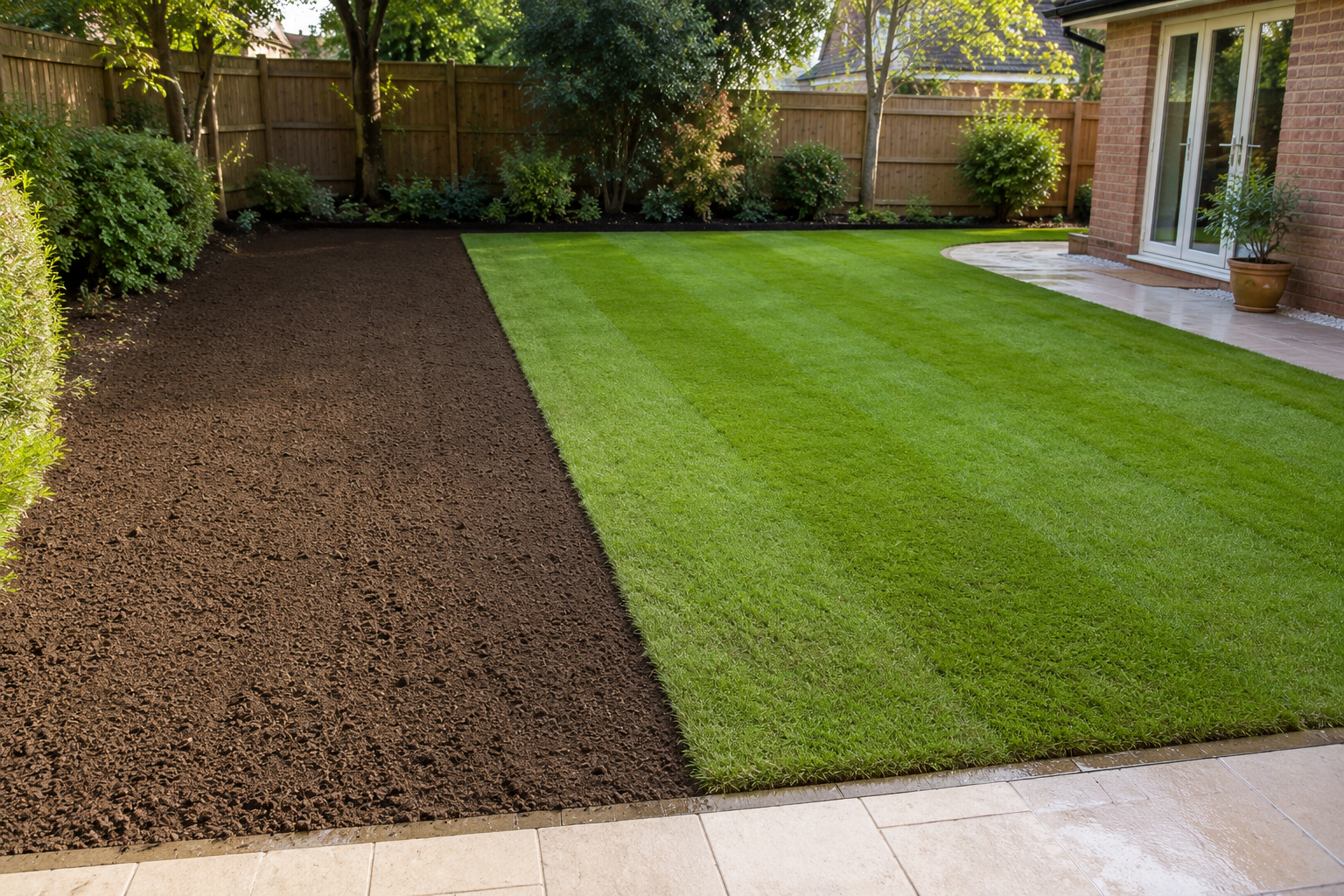
New lawns
For a new lawn, use 35–50g per m². Use the higher end if the area is exposed, uneven, likely to suffer wear, or you want faster visual coverage.
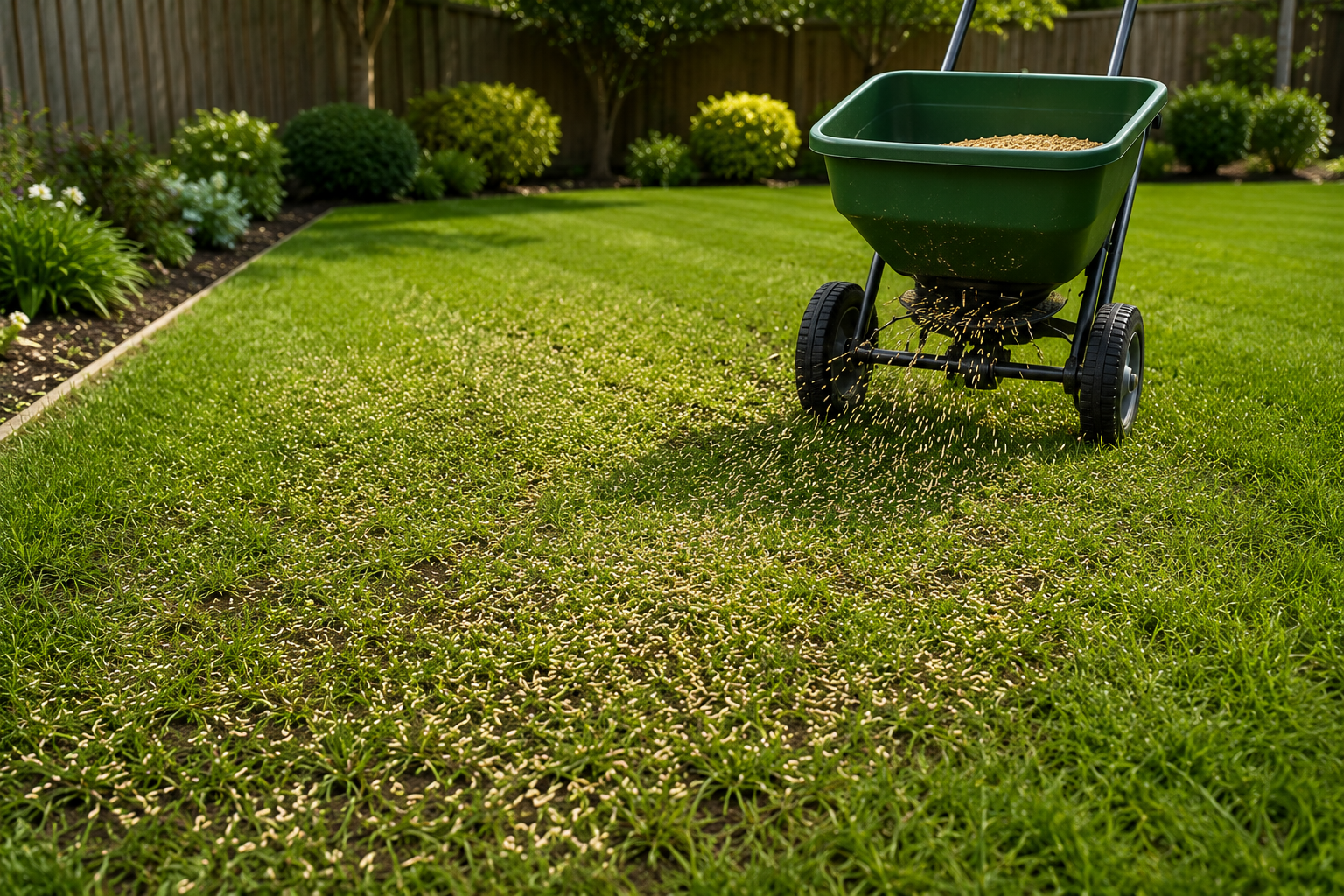
Overseeding
For overseeding, use 20–35g per m². A lightly thin lawn may only need 20g per m², while a patchy or scarified lawn may need closer to 35g m².
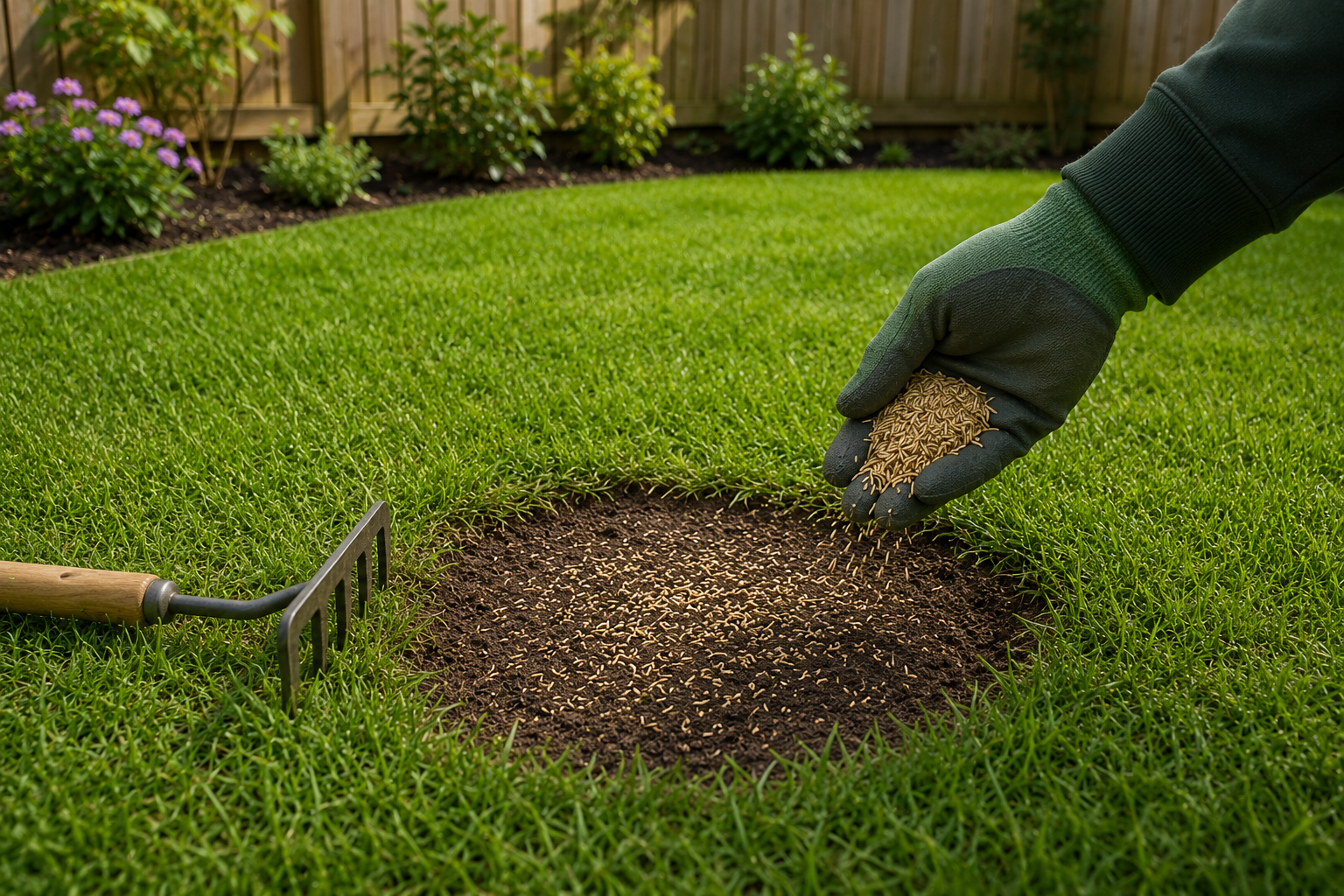
Patch repairs
For bare patches and heavy repairs, use 35–50g per m² over the repaired area. Bare soil needs enough seed to knit together properly and blend back into the surrounding lawn.

Sports turf and professional areas
For professional or sports turf, rates depend heavily on the seed mix, renovation method and intended use.
Hard-wearing sports and amenity mixes are often applied at around 35g per m² or more, while fine turf mixes for golf, bowling or cricket-style surface may sit around 25–35g per m².
| Job type | Suggested rate | Example for 100m² |
|---|---|---|
| Light overseeding | 20g per m² | 2kg |
| Standard overseeding | 25–35g per m² | 2.5–3.5kg |
| New lawn | 35–50g per m² | 3.5–5kg |
| Patch repair | 35–50g per m² | 3.5–5kg equivalent |
| Sports/lawn renovation | 35–50g per m² | 3.5–5kg |
| Fine turf | 25–35g per m² | 2.5–3.5kg |
How to calculate how much grass seed you need
Use this simple formula:
Area in m² × seed rate in g/m² = total seed in grams
Then divide by 1,000 to convert grams to kilograms.
For example:
100m² new lawn × 35g per m² = 3,500g = 3.5kg
So, for a 100m² lawn, you would usually need around 3.5–5kg of grass seed, depending on whether you sow at 35g or 50g per m².
How to measure your lawn area
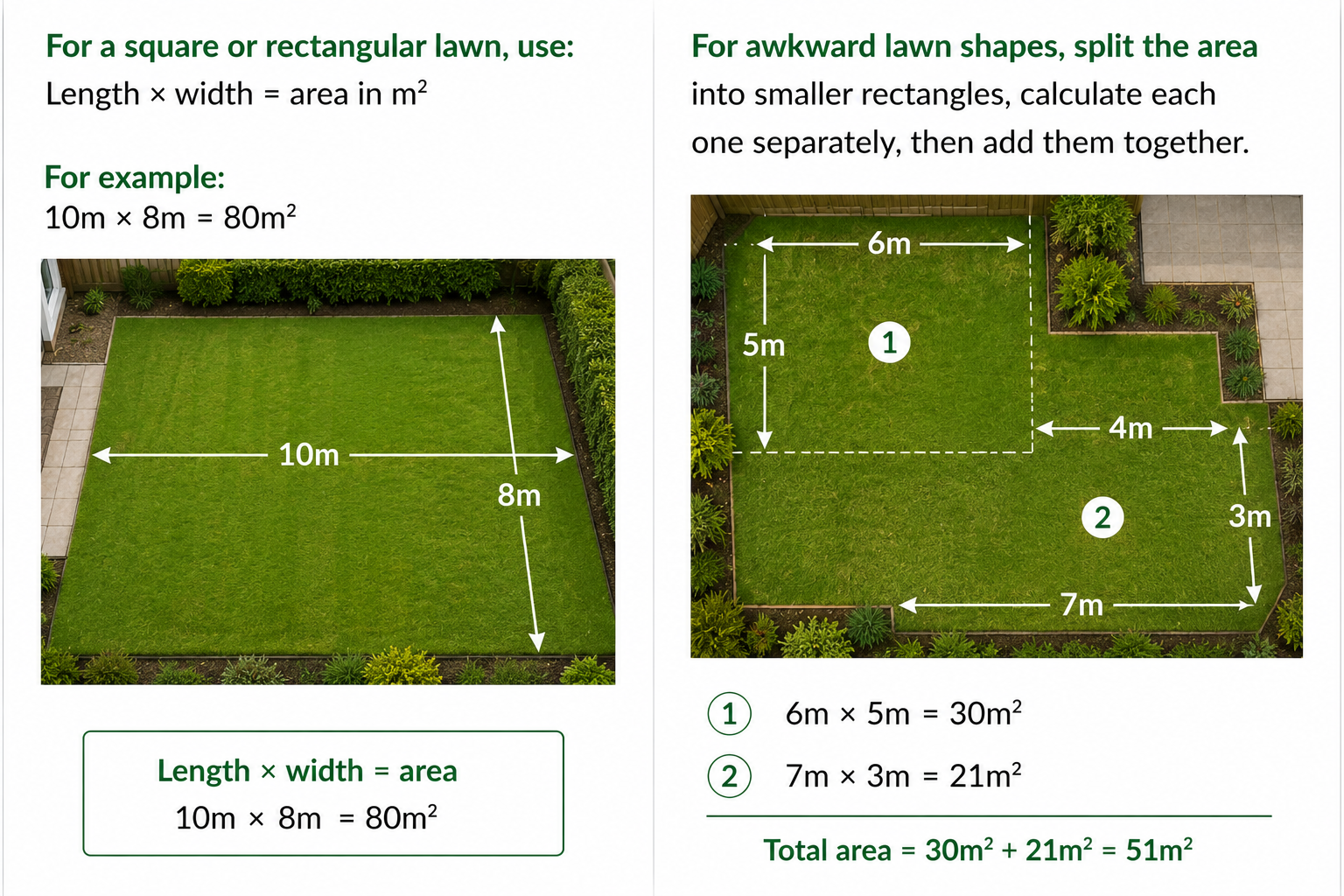
For a square or rectangular lawn, use:
Length × width = area in m²
For example:
10m × 8m = 80m²
For awkward lawn shapes, split the area into smaller rectangles, calculate each one separately, then add them together. This gives a more accurate result than guessing the total area.
Useful area conversions:
| Area | Approximate size |
|---|---|
| 1 acre | 4,047m² |
| 100m² | 1,076 sq ft |
| 1m² | 10.76 sq ft |
For an acre, even at 35g per m², you would need roughly:
4,047 × 35g = 141,645g = about 142kg
At 50g per m², an acre would need about 202kg of grass seed.
Simple grass seed calculator examples
Use these quick calculations as a guide when planning how much seed to buy.
| Lawn size | Overseeding at 25g per m² |
New lawn at 35g per m² |
Heavy sowing at 50g per m² |
|---|---|---|---|
| 25m² | 0.63kg | 0.88kg | 1.25kg |
| 50m² | 1.25kg | 1.75kg | 2.5kg |
| 100m² | 2.5kg | 3.5kg | 5kg |
| 250m² | 6.25kg | 8.75kg | 12.5kg |
| 500m² | 12.5kg | 17.5kg | 25kg |
For most home lawns, it is sensible to buy slightly more than the exact calculated amount. This gives you enough for edges, awkward corners, uneven spreading and later patch repairs.
How much area does a bag of grass seed cover?
Grass seed coverage depends on the application rate. A 5kg bag will cover more area at a lighter overseeding rate than it will at a heavier new lawn rate.
| Bag size | At 25g per m² | At 35g per m² | At 50g per m² |
|---|---|---|---|
| 1kg | 40m² | 28m² | 20m² |
| 5kg | 200m² | 142m² | 100m² |
| 10kg | 400m² | 285m² | 200m² |
| 20kg | 800m² | 571m² | 400m² |
So, if you are sowing a 100m² new lawn, a 5kg bag is usually enough at 50g per m², or more than enough at 35g per m². If you are overseeding the same 100m² lawn at 25g per m², you would need around 2.5kg of seed.
Which grass seed bag size should you buy?
The right bag size depends on your lawn area and whether you are overseeding, sowing from bare soil or repairing patches.
| Lawn size and job | Typical seed needed | Suggested bag size |
|---|---|---|
| 25m² overseeding | 0.5–0.9kg | 1kg |
| 50m² new lawn | 1.75–2.5kg | 5kg |
| 100m² new lawn | 3.5–5kg | 5kg |
| 250m² new lawn | 8.75–12.5kg | 10kg or 20kg |
| 500m² new lawn | 17.5–25kg | 20kg+ |
| 1-acre new lawn | 142–202kg | Bulk or multiple large bags |
If you are close to the upper limit of a bag size, it is usually better to order slightly more. Having a small amount left over is useful for future repair work, while running short part-way through a job can lead to uneven results.
Can you put too much grass seed down?
Yes, it is possible to put too much grass seed down. Many people assume that applying more seed will create a thicker lawn, but overapplying can cause problems.
When too much seed is used, seedlings compete with each other for:
• Light
• Water
• Nutrients
• Root space
• Airflow
This can lead to weak, spindly growth. The lawn may look crowded at first, but it may not establish as strongly as a lawn sown at the correct rate.
Too much grass seed can also create uneven growth, wasted seed, and a higher risk of disease if the area stays damp and crowded.
Signs you may have used too much seed include:
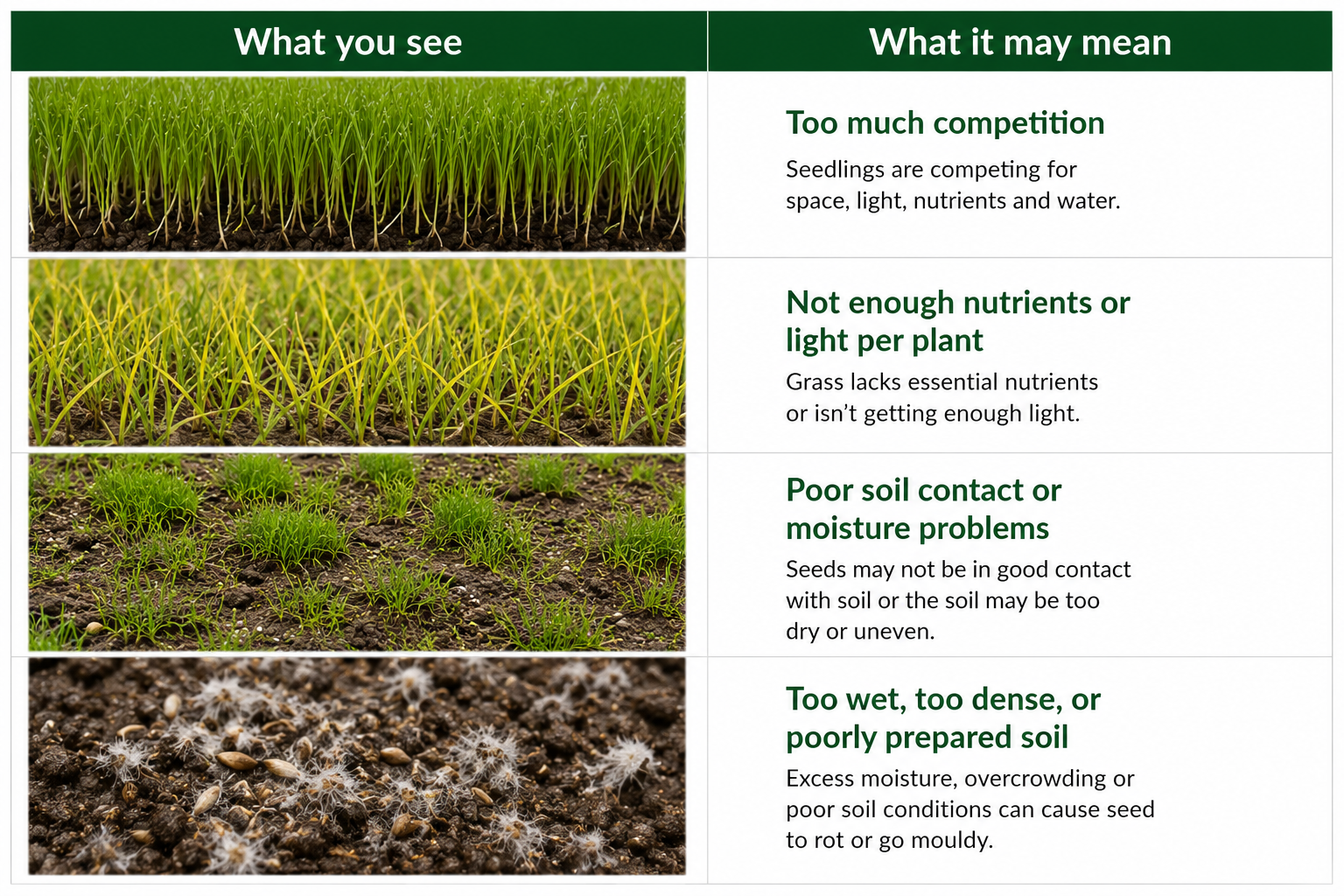
The best approach is to follow the recommended rate, spread seed evenly, and prepare the soil properly before sowing.
How much should you water grass seed?
Grass seed needs consistent moisture to germinate, but it should not be waterlogged. The aim is to keep the top layer of soil moist while the seed germinates and young roots begin to develop.
After sowing, water gently so the top layer of soil is damp. Then keep the seedbed moist until germination and early establishment. In dry weather, that usually means light watering once or twice a day. In cool or damp weather, you may need much less.
As a general guide:
• Water lightly after sowing
• Keep the top 1-2cm of soil moist during germination
• Water little and often in dry weather
• Avoid letting the seedbed dry out completely
• Avoid overwatering, puddling or waterlogging
• Reduce frequency once the grass is established and roots are deeper
The key is to check the soil rather than follow a fixed schedule. If the surface is drying out, water gently. If it is already damp, wait before watering again.
Too little water can stop germination. Too much water can wash seed away, bury it unevenly, encourage disease, or leave the soil airless.
A good rule is to water lightly and frequently until the grass has germinated, then gradually water less often but more deeply as roots develop.
How much topsoil do you need for grass seed?
Grass seed does not need to be buried deeply. It needs good contact with prepared soil.
For new lawns, aim for a well-prepared, level seedbed with a good growing layer of soil. If importing topsoil, a common practical depth is around 100–150mm for lawn establishment, depending on the existing ground.
For overseeding or patch repair, you usually only need a light dressing of topsoil or lawn dressing. Use enough to improve contact and level small hollows, but avoid smothering existing grass.
Approximate topsoil quantities:
| Depth | Topsoil needed per 100m² |
|---|---|
| 5mm dressing | 0.5m³ |
| 10mm dressing | 1.0m³ |
| 25mm light levelling | 2.5m³ |
| 100mm new lawn layer | 10m³ |
Use this formula:
Area in m² × depth in metres = topsoil volume in m³
For example:
100m² × 0.10m = 10m³
How professionals calculate and apply grass seed
Professionals usually start with the same basic calculation:
Area × application rate = seed required
However, they also adjust the rate depending on the site, surface use and seed mixture.
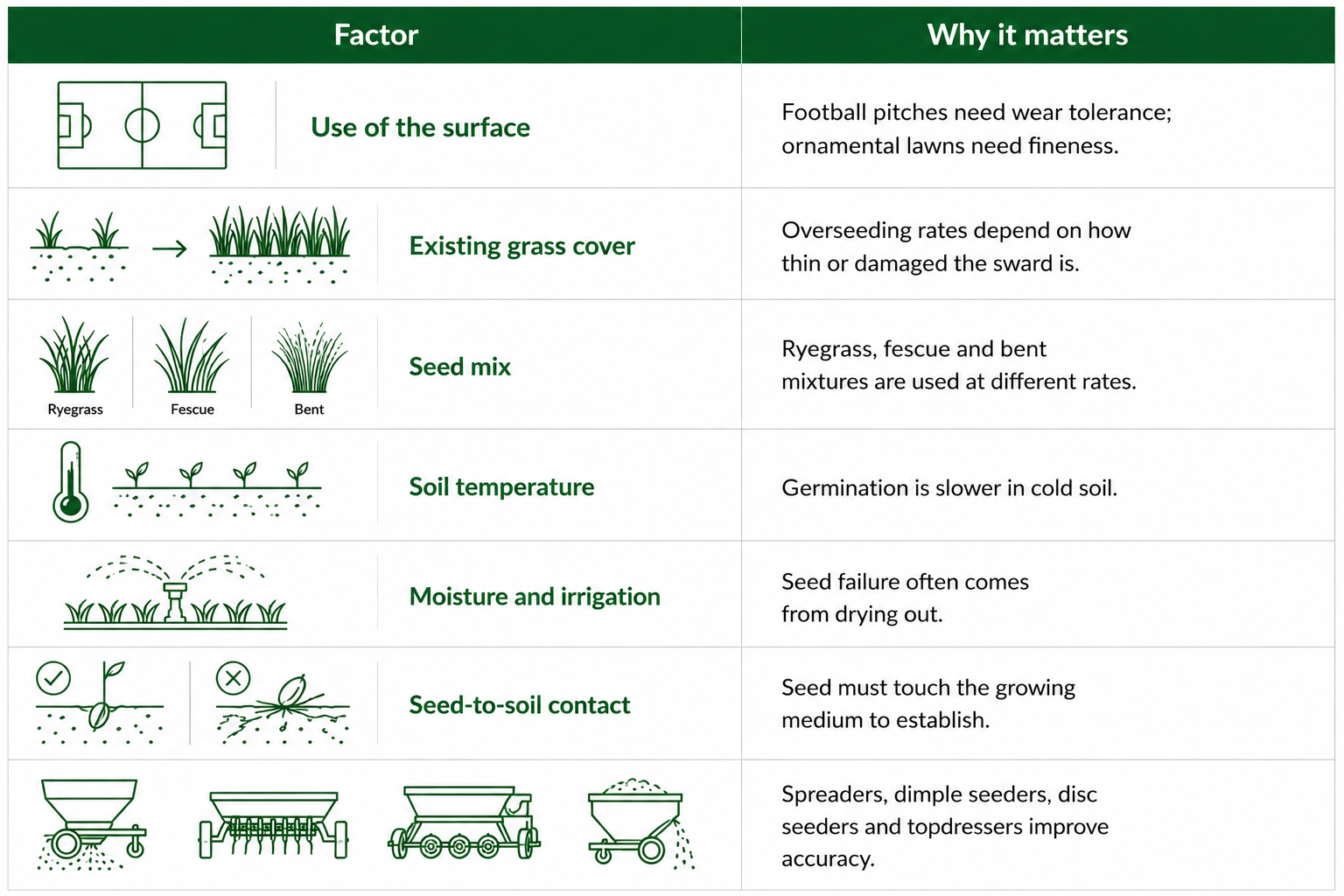
For football and rugby pitches, cricket outfields, school fields and landscaping work, hard-wearing ryegrass-based mixtures are often applied at higher practical rates, particularly during renovations.
For golf lawns, bowling greens and cricket squares, finer fescue and bent mixtures may use lower rates and need more precise preparation.
In professional turf work, moisture, suitable temperature and good seed-to-soil contact are just as important as the amount of seed applied.
Final thoughts: how much grass seed should you order?
For most lawns, the easiest way to calculate how much grass seed you need is to measure the area in square metres, choose the right application rate, then multiply the two together.
As a simple guide:
• Use 35–50g per m² for a new lawn
• Use 20–35g per m² for overseeding
• Use 35–50g per m² for patch repairs
• Check the product label for the exact rate recommended for your seed mix
• Buy slightly more than the exact amount to allow for edges, corners and future repairs
Not sure which bag size or seed mix is right for your project?
Get in touch with our team and we’ll help you calculate the right quantity for your lawn, pitch or landscaping job.