
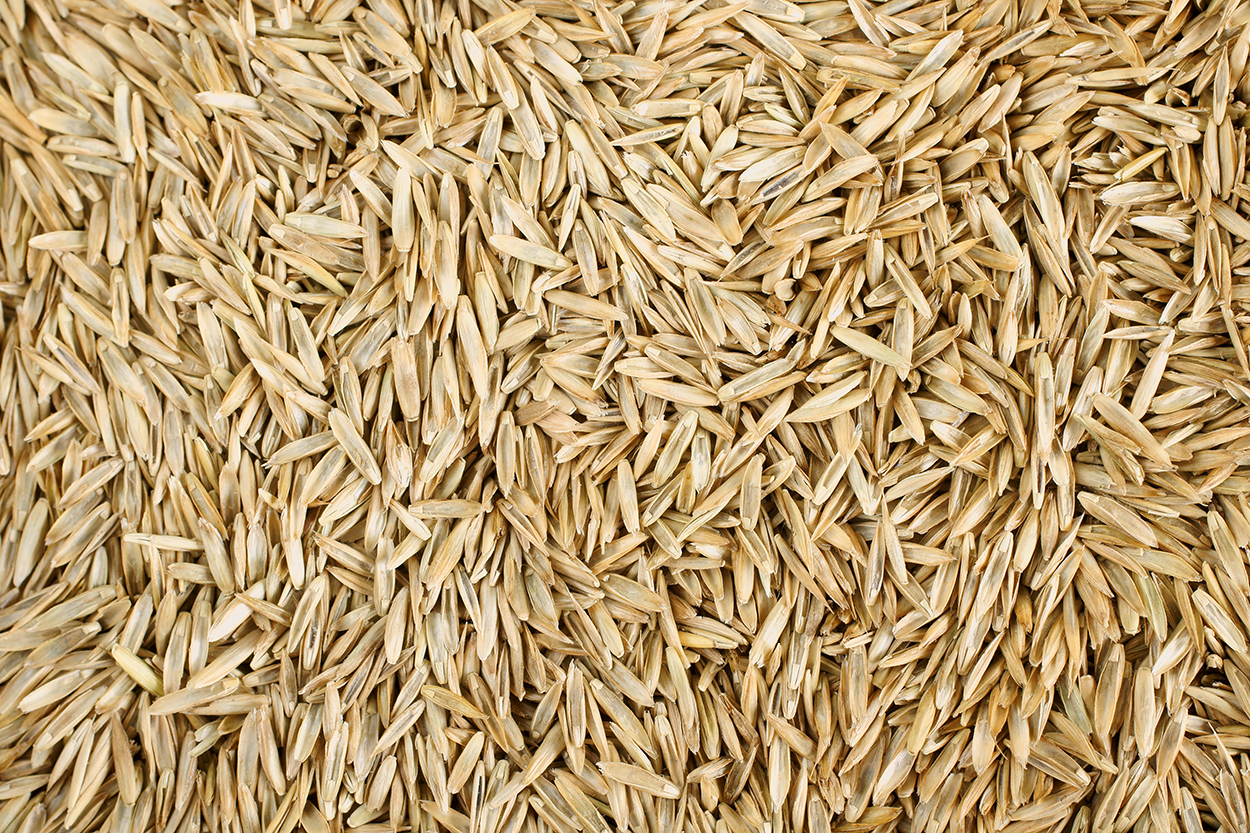
The professional approach to growing grass seed
For reliable results, follow the process in this order:
• Choose the right grass seed for the site and use.
• Clear and prepare the ground properly.
• Level and firm the soil to create a good seedbed.
• Sow the seed evenly at the correct rate.
• Lightly rake or dress the seed for good soil contact.
• Water consistently during germination.
• Protect the area from heavy use while it establishes.
• Mow carefully once the new grass is ready.
Skipping any of these stages can lead to poor germination, patchy growth or weak establishment.
What is the best grass seed to use?
The best grass seed is the one that matches the way the lawn will be used.
For a family lawn, choose a hard-wearing grass seed mix. These blends typically contain perennial ryegrass and fescues, which are known for their durability and ability to withstand regular foot traffic from children, pets and everyday garden use. Many general-purpose lawn seed mixtures combine perennial ryegrass, tall fescue, red fescues and browntop bent to create a resilient, attractive lawn that recovers well from wear and tear.
For a fine ornamental lawn, choose a finer-leaved mix. These blends create a softer, denser finish and are often used where appearance matters more than durability. They usually need more careful mowing and maintenance and are less tolerant of heavy use.
For a shaded lawn, use a shade-tolerant mix. Standard lawn seed may struggle under trees, beside fences or near buildings where light levels are low. Shade mixes usually contain grass varieties selected to perform better with limited sunlight.
For dry or poor soils, look for drought-tolerant or deep-rooting mixes. These are useful for exposed areas, free-draining soils and lawns that cannot be watered regularly.
For repairs and overseeding, choose a fast-germinating lawn repair or overseeding mix. These are designed to fill thin, worn or bare areas quickly and blend into an existing lawn.
Quality matters. Cheaper seed can contain lower-grade varieties, more dust and chaff, or a mix that is not well suited to your lawn. A better-quality seed mix should have a clear label, named grass species, a recommended sowing rate and a purpose such as hard-wearing, luxury, shaded, repair or landscaping.
Ryegrass or fescue?
Two of the main grass types used in seed mixtures are ryegrass and fescues. Understanding the difference between them can help you choose the best option for your lawn or project.
Ryegrass is the stronger, more durable grass type. It is commonly used on football fields and other hard-wearing sports surfaces because it copes well with heavy use. It establishes quickly and creates a robust surface, but it generally needs more feeding, more water and more ongoing maintenance to keep it looking and performing well.
Fescues are better suited to areas with little or no traffic. They are often used where a finer appearance and lower maintenance are more important than durability. Fescues usually need less water and feeding than ryegrass, but they are much less tolerant of wear and are not as robust in high-use situations.
In summary, if durability and wear tolerance are the priority, ryegrass is often the better choice. If you want a finer, lower-maintenance lawn for a lightly used area, fescues may be the better fit.
Choosing the right grass seed for your lawn
Different lawns have different needs. A family garden may need a hard-wearing seed mix, while a fine front lawn may need a neater, slower-growing blend. Shaded or dry areas may need a specialist mixture designed to cope with more difficult conditions.
| Lawn type | Recommended seed approach |
|---|---|
| New domestic lawn | General-purpose lawn seed |
| Family lawn | Hard-wearing seed mix |
| Fine ornamental lawn | Finer grass mixture |
| Shaded area | Shade-tolerant seed |
| Dry or poor soil | Specialist condition seed |
| Landscaping work | Reliable professional landscaping mix |
| Repairing patches | Fast-establishing repair seed |
Matching the seed to the site helps reduce the risk of slow, patchy or uneven establishment.
How to prepare soil for grass seed
Soil preparation is where most lawn seeding success is won or lost. Grass seed needs a clean, level, firm and crumbly surface to establish properly.
In professional lawn establishment, ground preparation is treated as the foundation of the job. If the base is uneven, compacted or poorly cleared, even good-quality seed will struggle to perform.
Start by clearing the area. Remove old turf, weeds, stones, roots, rubble and debris. Perennial weeds should be dealt with properly before sowing because they can grow back through the new lawn and compete with young grass.
Next, loosen compacted soil. If the ground is hard, dig or cultivate it to improve structure and drainage. Aim to loosen the top layer of soil enough to create a workable base for new roots.
Once the soil has been loosened, improve it if needed. Heavy clay soils may benefit from top dressing and organic matter to improve drainage and structure. Light sandy soils may benefit from good-quality topsoil or compost to help hold moisture and nutrients.
Then level the area. Rake the soil in different directions, breaking down lumps and removing stones as you go. Aim for a fine, crumbly surface. After that, firm the soil by walking over it with small shuffling steps, then rake again lightly. This creates a surface that is firm underneath but fine on top, which is ideal for seed.
Avoid sowing into fluffy, loose soil. If the soil is too soft, seed can be buried too deeply, and the finished lawn may settle unevenly later.
How to sow grass seed properly
Always follow the sowing rate on the seed packet. Different mixes have different recommended rates, especially for new lawns compared with overseeding.
New lawns usually need a heavier application than overseeding, while patch repairs may need a more concentrated amount in smaller areas. Measuring the area first will help you apply the correct amount of seed and avoid thin or overloaded patches.
Professionals measure the area and apply seed at the recommended rate rather than guessing. This helps avoid thin patches, waste and overcrowded growth.
For even coverage, divide the seed into two equal batches. Sow the first half by walking up and down the area in one direction. Sow the second half at right angles, walking side to side. This cross-sowing method helps avoid missed strips and heavy patches.
You can sow grass seed by hand on small areas. For larger lawns, a handheld or wheeled spreader will give more consistent coverage. Try to sow on a calm day so the seed does not blow into borders, paths or corners.
After sowing, lightly rake the surface so the seed is worked into the top layer of soil. Do not bury it deeply. Grass seed needs contact with soil, moisture and warmth, but it also needs to be close enough to the surface to germinate successfully.
Finally, gently firm the area. You can use a lawn roller if you have one or carefully tread the area. This helps press the seed into contact with the soil.
Should you cover grass seed with soil?
Yes, but only lightly.
Grass seed should not be left sitting loosely on the surface if you want reliable germination. Good seed-to-soil contact helps the seed absorb moisture and anchor its first roots. However, covering seed too deeply can stop it from germinating properly.
A light rake after sowing is usually enough to cover most of the seed with a thin layer of soil. You can also apply a very light top dressing of fine topsoil or lawn dressing, especially when overseeding or repairing patches. The key is to cover the seed lightly, not bury it.
Seed left completely on top of the soil may still germinate if conditions are moist, but results are usually less consistent. Birds may eat it, wind can move it, rain can wash it into clumps, and dry weather can stop it from swelling and sprouting.
Can you sow grass seed on an existing lawn?
Yes. Sowing grass seed onto an existing lawn is called overseeding, and it is one of the best ways to improve a thin, tired or patchy lawn without starting again.
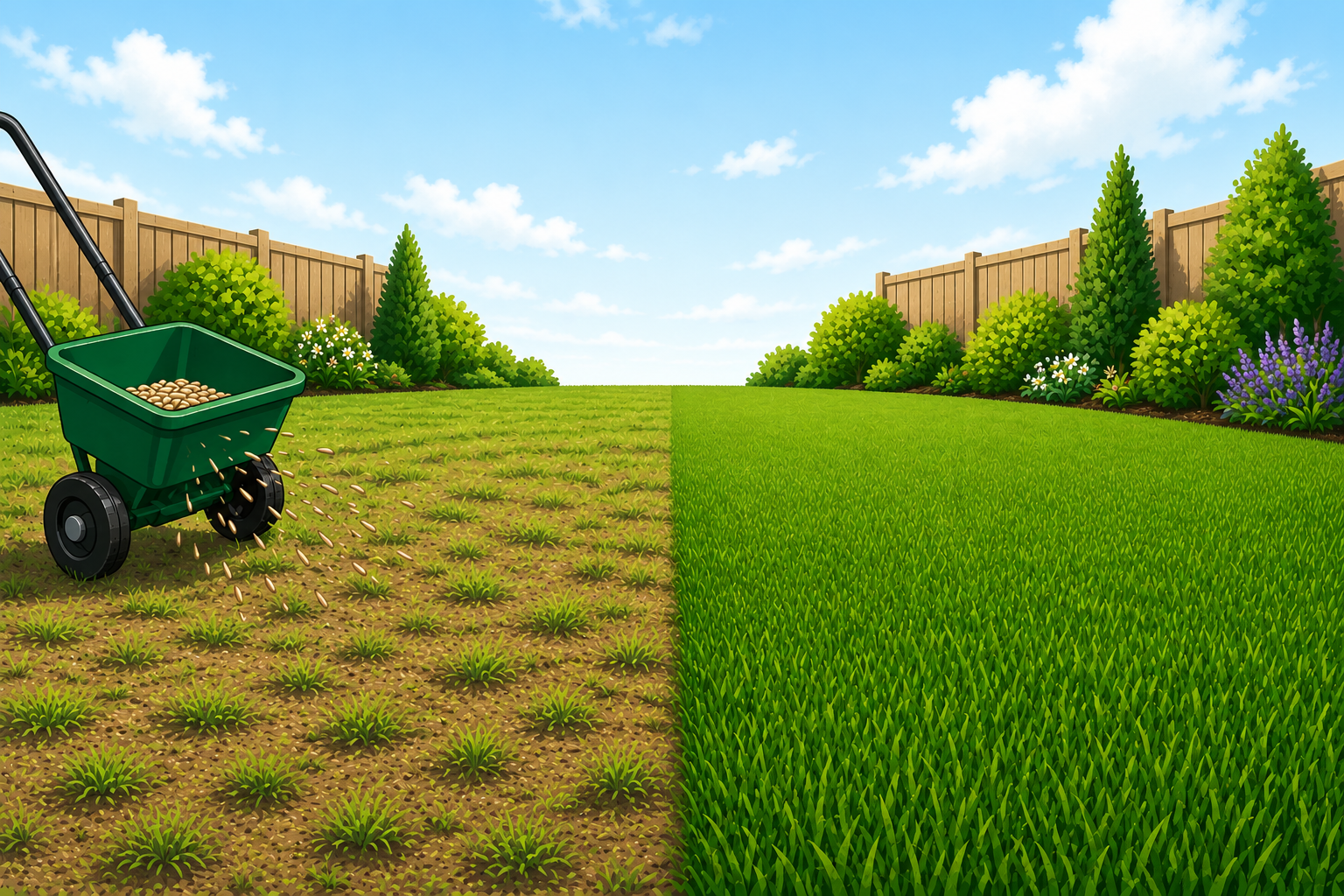
Overseeding is useful when:
• the lawn looks thin or weak
• there are bare patches after scarifying
• pets, children or heavy use have worn areas down
• the lawn has suffered from drought
• you want to introduce stronger or finer grass varieties
• moss and weeds have left gaps after treatment
Before overseeding, mow the existing lawn shorter than usual and remove the clippings. Rake or scarify the surface to remove moss, thatch and loose material. The aim is to open up the surface so the new seed can reach the soil rather than sitting on top of old grass and debris.
For compacted lawns, aerating before overseeding can help. This allows air, water and nutrients to reach the rootzone and gives new seed a better chance of establishing.
Once prepared, spread the seed evenly, lightly rake or brush it in, then apply a fine lawn dressing if needed. Water gently and keep the area consistently moist while the seed germinates.
How often should you water grass seed?
New grass seed must be kept moist but not waterlogged.
Immediately after sowing, water gently using a fine spray. Avoid a heavy jet of water because it can wash the seed into piles or move it away from where you sowed it.
In dry weather, water lightly and frequently enough to keep the top layer of soil damp. This may mean watering once or twice a day during warm, dry spells, especially on sandy soils or sunny sites. In cooler or wetter weather, you may need to water far less.
A simple watering routine is:
• water immediately after sowing with a fine spray
• keep the top layer of soil damp during germination
• water slightly once or twice a day in dry weather
• reduce watering once the grass is growing
• move to deeper, less frequent watering as the lawn establishes
The aim is consistent moisture. If seed dries out after it has started germinating, it can fail. But overwatering can be just as damaging, causing puddling, seed movement, disease or poor rooting.
Once the grass has germinated and started to grow, gradually reduce the frequency and water more deeply. This encourages roots to grow down into the soil rather than staying shallow at the surface.
Why is my grass seed not growing?
Grass seed usually fails for one of a few common reasons.
The first is poor timing. Grass seed germinates best when soil is warm and moisture is available. Cold soil slows germination, while hot dry weather can cause seed to dry out before it establishes. In the UK, spring and autumn are generally the most reliable sowing periods, with autumn often giving excellent results because the soil is still warm and natural rainfall is more likely.
The second is poor soil contact. If seed is sitting on top of thatch, moss, stones or compacted ground, it may not root properly. Seed needs to touch soil to establish well.
The third is lack of moisture. Grass seed needs steady moisture through germination. Drying out at the wrong stage is one of the most common causes of patchy results.
The fourth is burying the seed too deeply. A heavy layer of soil or compost can prevent shoots from reaching the surface.
Other problems include birds eating the seed, heavy rain washing it away, poor-quality seed, old seed, compacted soil, poor drainage, too much shade, or using weedkiller too close to sowing.
If your grass seed has not grown after two or three weeks, check the conditions before reseeding. Look at moisture, soil temperature, seed depth, soil contact and whether the area has been disturbed.
How professionals get the best results from grass seed
Professional results usually come from consistency, not shortcuts.
Professionals start by choosing the right seed mix for the site. They do not use the same seed everywhere. A shaded garden, a family lawn, a sports area and a fine ornamental lawn all need different seed choices.
They also spend more time on preparation than sowing. The ground is cleared, levelled, firmed and raked properly before seed goes down. This creates the right base for even germination and a smooth finish.
They sow accurately. That means measuring the area, using the correct seed rate and spreading in two directions for even coverage.
They protect the seed where needed. On small areas, fleece or netting can help protect against birds, reduce seed movement and help retain moisture during establishment.
Most importantly, professionals manage the aftercare. They keep the seedbed moist, avoid heavy use while the lawn establishes, and mow carefully once the new grass is tall enough. As a general rule, wait until the new grass is around 5–7.5cm tall before the first cut, and never remove more than about one-third of the height at once.
Final thoughts
Growing grass seed successfully comes down to following the right process from start to finish. Choosing the correct seed is important, but preparation, sowing technique and aftercare are what turn that seed into a strong, even lawn.
A hard-wearing family lawn, a shaded garden and a fine ornamental lawn all need different seed choices. Matching the seed to the site gives the lawn the best chance of establishing evenly and staying healthy long term.
For reliable results, start with good-quality grass seed, prepare the soil carefully and keep the seedbed moist while the new lawn establishes. If you are unsure which seed mix is right for your project, speak to a turf or landscaping supplier who can recommend the most suitable option for your soil, site and intended use.